
Building a Resilient Life
A practical guide to creating a safer, more self-reliant home—one thoughtful step at a time.
FEATURED
Preparing for Whatever Comes Our Way
Life doesn't always go according to plan.
Storms knock out the power.
Water lines break.
Supply chains are interrupted.
Illness happens.
Unexpected expenses arise.
None of us can predict exactly what tomorrow will bring, and after enough years, we've learned that uncertainty is simply part of life.
The question isn't whether challenges will come.
The question is how we'll respond when they do.
Preparing for those moments isn't about expecting the worst.
It isn't about fear.
And it certainly isn't about preparing for the end of the world.
It's about preparing for whatever comes our way.
One lesson has stayed with us throughout every season of life.
The world around us will always change.
The economy changes.
Technology changes.
Policies change.
Markets change.
Some of those changes work in our favor.
Others don't.
We've learned that spending our time worrying about things beyond our control rarely changes the outcome.
Instead, we've chosen to focus on the things we can control.
We can learn new skills.
We can grow some of our own food.
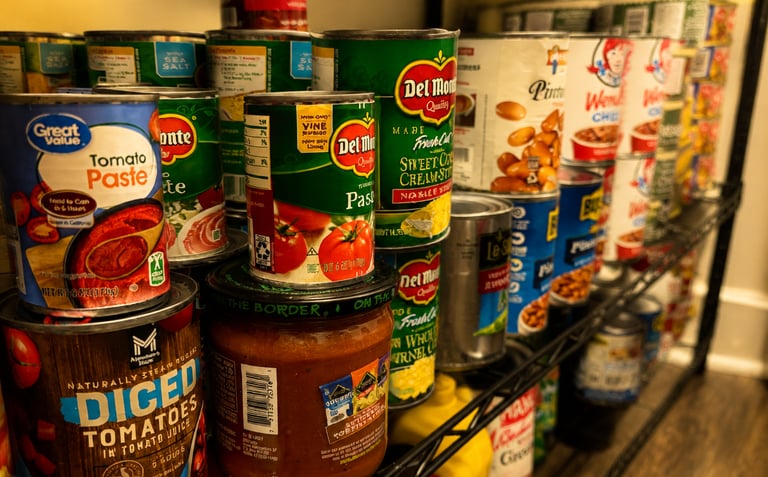
We can keep a well-stocked pantry.
We can prepare for temporary power outages.
We can strengthen our home.
We can care for our health.
We can build relationships with our neighbors.
Those choices don't eliminate uncertainty.
They simply make us less dependent on it.
To us, that's what self-reliance has always meant.
Not doing everything ourselves.
Not withdrawing from the world.
Simply taking responsibility for the things within our control while adapting with confidence to the things that aren't.
When we transitioned from our homestead to a much smaller home, we didn't leave preparedness behind.
We reimagined it.
Instead of asking,
"How much can we store?"
we began asking,
"What do we actually need?"
That simple question changed everything.
Our focus shifted from accumulating more things to building smarter systems.
Systems that fit our home.
Systems that fit our lifestyle.
Systems we could realistically maintain.
Today, our preparedness looks different than it did years ago, but it's also more intentional.
Every decision comes back to one simple question:
Will this make our home a little more resilient?
Sometimes the answer is a backup power station that keeps the refrigerator running during an outage.
Sometimes it's storing enough food to avoid an unnecessary trip to the grocery store.
Sometimes it's having clean water, a flashlight that works, or a simple way to cook dinner when the electricity goes out.
Sometimes it's learning a skill that costs nothing but pays dividends for years.
None of those things are dramatic.
They're simply practical.
One of the greatest lessons we've learned is that resilience isn't built all at once.
It grows one thoughtful decision at a time.
A few extra meals in the pantry.
A backup source of power.
A water filter.
A first-aid kit that's fully stocked.
Knowing your neighbors.
Learning a new skill.
Growing a little more of your own food.
Each step may seem small on its own.
Together, they create confidence.
That's what this guide is about.
Not preparing for the end of the world.
Preparing for real life.
Preparing for whatever comes our way.
Because while we can't control every circumstance we'll face tomorrow...
We can control how prepared we choose to be.
What You'll Learn in This Guide
Building a resilient home isn't about buying everything at once.
It's about making thoughtful decisions that strengthen your home and simplify your life over time.
In this guide we'll explore:
Building a practical emergency pantry
Backup power for homes of every size
Water storage and filtration
Emergency cooking solutions
Staying comfortable during power outages
Home safety and security
Communication when traditional systems fail
Organizing important documents
Developing practical skills instead of simply accumulating gear
Creating a preparedness plan that grows with your family
Most importantly, we'll show you how to build a home that's prepared for everyday interruptions without letting preparedness become a source of worry.
Why This Guide Exists
Preparing for the unexpected has always been part of the way we've lived.
It looked one way when we lived on several acres.
It looks different today in a smaller home.
What hasn't changed is our desire to care for the people we love, become a little more self-reliant each year, and face life's interruptions with confidence instead of panic.
We've learned that resilience isn't measured by the size of your pantry or the number of gadgets you own.
It's measured by your ability to adapt.
To solve problems.
To remain calm.
To make thoughtful decisions before they're needed.
That's why we wrote this guide.
Not because we think you should prepare for every possible emergency.
But because we believe every family can benefit from becoming just a little more capable, a little more resilient, and a little less dependent on circumstances they cannot control.
Welcome to Homesteading 2.0.
Let's build a home that's ready for whatever tomorrow brings.
Continue Your Homesteading 2.0 Journey
We hope this guide has helped you feel a little more confident about growing food in your own space.
Every guide on Two Otters Homestead is based on our own experiences as we've transitioned from a traditional homestead to what we call Homesteading 2.0. We'll continue updating these guides as we learn, experiment, and discover better ways to live a more self-reliant life.
If you have a question we didn't answer, we'd genuinely love to hear from you.
Continue Reading
The Complete Guide to GreenStalk Gardening
Indoor Gardening Made Simple
Growing Food Year-Round in a Small Space
Building a Resilient Home
Free Download
The Homesteading 2.0 Starter Checklist
A practical guide to help you begin growing more of your own food with confidence.
Download the Free Checklist →