
Meat Rabbit Housing: Key Features for Predator Protection and Environmental Control
Building a strong and solid hutch system for your rabbits is the first step to successfully raising meat rabbits.
1/7/20263 min read
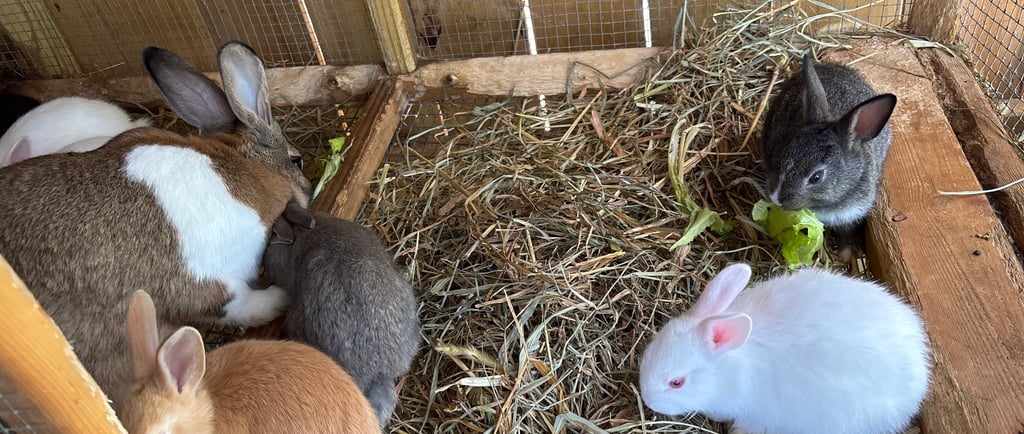
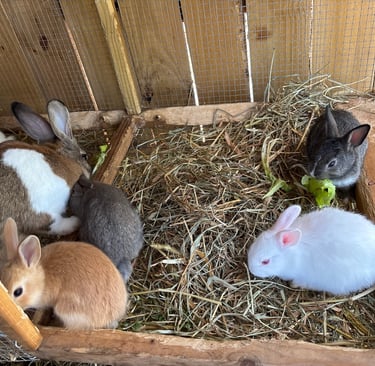
As with every area within homestead production, the key is building a solid, expandable infrastructure beforeintroducing the animals. A solid foundation greatly reduces stress for both you and your livestock.
1. Setting Goals: Production Schedule and Timing
First, determine your goals for meat production. We currently maintain two does and one buck, a setup capable of producing hundreds of pounds of meat annually with consistent, managed breeding.
The Climate Factor
Heat is a real issue for rabbits—they tolerate cold much better than heat. We plan our breeding schedule around temperature mitigation:
February Breeding: The kits are ready for processing before the weather becomes too hot.
August Breeding: The weather is starting to cool down, making for an ideal environment as the kits grow up during the comfortable fall months.
2. Hutch Design: Materials and Floor Safety
Once you know your numbers, it's time to build or buy your cages. If you are handy, we highly recommend building your own, as the main expense will be the wire.
The Wire
There are two things to consider with the wire: safety and foot health.
Size: You must use 1/2" wire for the floors and sides. This size is small enough to deter predators and strong enough to support the rabbits, while also being safe for their feet.
Coating: Do not use plastic-coated wire. Rabbits chew constantly, and you do not want them ingesting plastic.
Elevation: Ensure the entire cage structure is at least 2 feet off the ground to deter ground predators (fox, coyotes, raccoons) and facilitate easy manure cleanup.
Sore Hocks Prevention
We also provide a resting mat or solid space (e.g., a board or plastic mat) for them to get off the wire floor. This is crucial for preventing sore hocks, a painful condition caused by continuous pressure on the wire.
3. Necessary Supplies: Feeders, Waterers, and Space
For our setup (two does and one buck), each adult requires their own individual hutch. You must also have your grow-out cages ready.
Kindling Warning: Rabbits have a short gestation period! As soon as you breed, you will have kits (babies) about 30 days later. Have your grow-out cages ready!
Cage Size: Individual adult cages need to be at least $2 \text{ft} \times 4 \text{ft}$.
Grow-Out Cages: Partition your grow-out cages. Once the young rabbits (fryers) mature, it is critical to separate the bucks and the does into separate cages to prevent unwanted breeding.
Feeders and Waterers
Feeders: We recommend using self-feeders (J-feeders). They work well because they prevent feed waste and minimize contamination, as the rabbit cannot sit in or soil the food source.
Waterers: We use rubber watering bowls. While some people prefer bottled waterers (which prevent tipping), we like being able to easily provide fresh water multiple times a day and quickly break the ice free in the winter.
4. Predator Proofing: Securing the Rabbitry
For smaller kits, snakes can be a concern, but your main worry is larger predators. Security needs to be multi-layered:
Wire: Use the small-gauge $\frac{1}{2}\text{-inch} \times 1\text{-inch}$ hardware cloth/wire.
Latches: Make sure the doors to the cages are secure. We use two latches per door.
Backup: We add a bungee cord to the wire for a third layer of security.
5. Environmental Control: Managing Heat and Cold
Rabbits handle the cold much better than the heat, but they still need protection from the elements.
Heat Management (Crucial)
If possible, position your hutch in a shaded area. When temperatures soar:
Cooling Mats: We purchase ceramic tiles from a big box store, freeze them, and place them in the cage. Rabbits love laying on the cold tile.
Airflow: We use fans positioned to circulate air and reduce stagnant heat.
Hydration: Providing fresh, cool water is absolutely huge.
Cold Management
We reduce drafts and use furniture blankets (purchased from places like Harbor Freight) to drape over the hutches to provide insulation and stop the wind. We also provide much more hay than normal on cold nights for extra nesting warmth.
Remember: Rabbits only need protection from the drafts and wind, not the cold itself.Raising rabbits is amazing! They are prolific meat producers for the homestead and are fun to raise.
Next Step: Now that you have the infrastructure built, let's look at the next crucial step: the breeding process. Read our guide: [Link to Breeding Post].