
The Complete Guide to Greenstalk Gardening
Everything you need to know about Greenstalk planters, soil, nutrients, planting and maximizing your harvest.
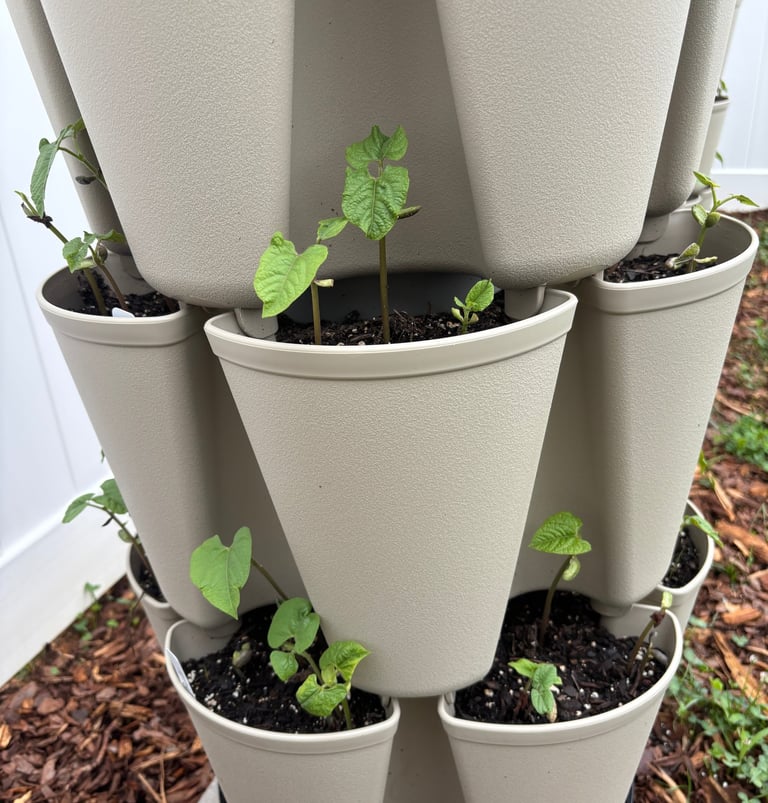
If someone had told me ten years ago that I'd be growing more food in vertical planters than I once grew in large raised beds or in rows, I probably would have laughed.
For more than three decades, gardening looked exactly as I thought it should. Long rows eventually gave way to raised beds, and over time we embraced the Square Foot Gardening method. Every change taught us something new, and each improvement allowed us to grow more food while making better use of the space we had.
Our garden wasn't just a hobby.
It helped feed our family.
It filled our pantry.
It became part of the lifestyle we loved.
Then life changed.
When my wife and I made the decision to leave our homestead and move to a much smaller home, we knew one thing for certain.
We weren't ready to stop growing food.
The challenge wasn't learning how to garden.
The challenge was learning how to garden differently.
Like many people downsizing, we suddenly found ourselves with limited space. The large vegetable garden was gone, but our desire to grow fresh food hadn't changed. Instead of asking ourselves what we had lost, we started asking a different question.
How much food can we realistically grow in a small space?
That question led us to GreenStalk.
So, What Is GreenStalk Gardening?
GreenStalk is a vertical gardening system made up of stackable planting pockets that allow you to grow a surprising amount of food in a very small footprint.
Instead of spreading your garden across hundreds of square feet, GreenStalk encourages you to grow upward. Each planter contains multiple growing pockets, and additional tiers stack securely on top of one another, creating an attractive tower capable of producing herbs, vegetables, flowers, strawberries, and much more.
For anyone gardening on a patio, deck, balcony, townhouse, condominium, or in a small backyard, it offers an efficient way to maximize every square foot.
But after using GreenStalk ourselves, I've learned that saving space is only part of the story.
Why We Chose GreenStalk
As we began researching vertical gardening systems, several companies offered products that looked similar on the surface.
GreenStalk kept rising to the top.
Part of that decision came from the company's reputation. GreenStalk is family-owned, manufactures its planters in the United States, and has earned an incredibly loyal following among gardeners.
Those things mattered to us.
We also appreciated the thoughtful design.
The built-in watering system distributes water from the top of the planter throughout each tier. The optional spinning base makes it easy to rotate the entire planter so every pocket receives balanced sunlight. Perhaps most importantly, everything is elevated to a comfortable working height.
As we've gotten older, we've realized gardening should still be enjoyable.
Less bending.
Less kneeling.
Less strain.
More time simply enjoying the process.
GreenStalk checked every one of those boxes.
It's Not Just Gardening in a Different Container
One mistake I made early was assuming I already knew everything I needed to know.
After all, we'd been gardening successfully for decades.
How different could container gardening really be?
As it turns out...
Quite different.
Containers behave differently than raised beds.
They dry out faster.
Nutrients wash through the soil more quickly.
The soil mix becomes far more important.
Plant spacing changes.
Watering habits change.
Even choosing which vegetables perform best requires a different mindset.
Fortunately, the learning curve wasn't difficult.
It was simply different.
In many ways, I found myself becoming a student again.
And honestly, that has been one of the most enjoyable parts of this journey.
What You'll Learn in This Guide
Since setting up our first GreenStalk planters, we've experimented with soil mixes, fertilizers, crop selection, watering routines, and seasonal planting schedules.
Some ideas worked exactly as planned.
Others taught us valuable lessons.
Throughout this guide, we'll share both.
We'll cover:
Choosing the right GreenStalk planter
Our favorite soil mix
Fertilizing container gardens
Watering tips and common mistakes
What we've successfully grown
Crops we'd recommend—and a few we'd skip
Accessories we actually use
Seasonal planting ideas
Answers to the questions we hear most often
Everything you'll read comes from our own experience as we transitioned from a traditional homestead to what we now call Homesteading 2.0.
More Than a Vertical Garden
Today, our garden looks very different than it did years ago.
There are no long rows stretching across the yard.
No tractor.
No large fenced garden.
Instead, there are GreenStalk planters, carefully selected containers, and a growing system designed specifically for the space we have today.
And you know what?
We're still harvesting fresh vegetables.
We're still learning.
We're still enjoying every minute of it.
That's what Homesteading 2.0 means to us.
It isn't about trying to recreate the past.
It's about proving that a productive garden isn't measured by the amount of land you own.
It's measured by the food you grow, the lessons you learn, and the joy you find along the way.
So whether you're working with a backyard, a small patio, or even a sunny balcony, I hope this guide gives you the confidence to grow more than you thought possible.
Let's get started.
Continue Your Homesteading 2.0 Journey
We hope this guide has helped you feel a little more confident about growing food in your own space.
Every guide on Two Otters Homestead is based on our own experiences as we've transitioned from a traditional homestead to what we call Homesteading 2.0. We'll continue updating these guides as we learn, experiment, and discover better ways to live a more self-reliant life.
If you have a question we didn't answer, we'd genuinely love to hear from you.
Continue Reading
The Complete Guide to GreenStalk Gardening
Indoor Gardening Made Simple
Growing Food Year-Round in a Small Space
Building a Resilient Home
Free Download
The Homesteading 2.0 Starter Checklist
A practical guide to help you begin growing more of your own food with confidence.
Download the Free Checklist →