
The Ideal Chicken Coop Design: 5 Non-Negotiable Features for Healthy Egg Production
1/6/20263 min read
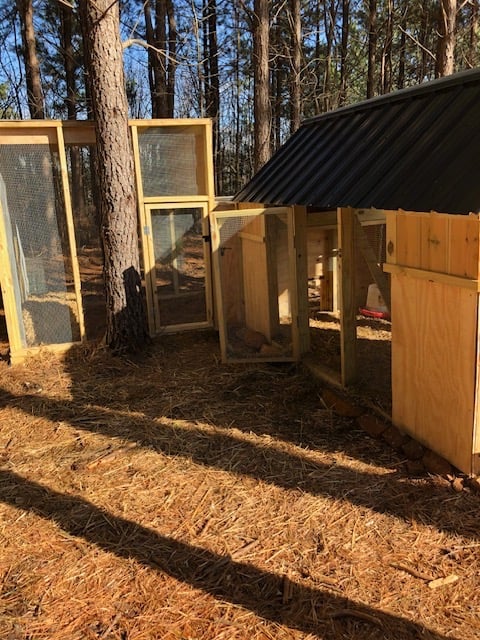
Chickens are typically the first introduction to raising animals on a homestead—and for good reason! They are easy to maintain, and they produce a wonderful, healthy protein.
As with any project on the homestead, building a solid infrastructure is key to a stress-free, manageable life and providing an environment where your chickens will be happy and lay consistently.
1. Determining Your Flock Size & Space Requirements
Before building, decide on your "magic number." Experience tells us you will always want to increase that amount, so plan ahead!
When calculating flock size, keep the seasonal lay cycle in mind: your hens will lay daily in the spring and summer, but production will drop significantly in winter. Plan for how you will use or preserve those summer eggs (we freeze dry ours and supplement with our quail flock).
Homestead Tip: We highly recommend planning for at least 2 to 4 more chickens than you currently intend to buy. Adding space now is always cheaper than attempting to expand later. Always introduce new birds in pairs.
Space Requirements
For maximum egg production and a good overall community, do not deviate from these space requirements:
Coop (Roosting): 3 to 4 square feet per bird.
Run (Daytime Roaming): 10 square feet per bird.
If your chickens are overcrowded, you run the risk of sickness, manure management issues, and a significant drop in egg production.
2. Feature 1: The Role of Ventilation and Air Quality
The main coop area must have adequate ventilation to promote chicken health.
The Problem: Chicken manure produces ammonia. Without proper ventilation, that ammonia can build up, leading to upper respiratory issues and impacting egg production.
The Climate Fix: You will be compelled to close the coop completely to keep chickens warm in winter, but this traps moisture. Chickens have an internal temperature of 107 degrees—it is best to just keep the wind and direct drafts off of them.
Actionable Ventilation: The key is placing vents high up near the roofline to draw out the rising ammonia and moisture without creating a draft at roost height.
Related Guide: We will be sharing a guide on managing your laying hens in cold weather: [Link to Winter Care Post].
Deep Litter Method
Within the coop area, we use a deep litter method for the floor. We regularly add a layer of straw, followed by a layer of pine shavings, to help maintain an odor-free environment and help the birds stay warm in the winter. If you notice an ammonia smell, it is important to act right away and add more litter or clean the coop.
3. Feature 2: Roosting Area Design
A chicken will sleep off the ground by instinct—that is their way of being safe from any predators.
The Roost: The roost needs to provide them with an area to rest their feet as they sleep. For this reason, we recommend using a 2”x2” board. .
Space: The roost area should allow for at least 12 inches of linear space per bird and provide them with ample room from the sides of the coop.
Placement: Place the roost over an area where you can easily clean or manage the droppings, as they will produce manure throughout the night.
4. Feature 3: Nesting Box Ratios and Placement
You will want a nesting box for every 4 or 5 hens.
Design: Boxes should be off the ground and lower than the roosting area (you don't want them sleeping and pooping in their nests!).
Environment: This area needs to be dimly lit, allowing them a calm, private place to lay. We use straw or pine shavings as bedding.
Habit: Chickens are creatures of habit. Even with ample boxes, they will often choose one or two "favorite" boxes where they feel safest, sometimes laying at the same time in the same spot!
5. Feature 4: The Ultimate Defense: Predator Proofing
One of the most important aspects of chicken housing is ensuring they are safe from predators (skunks, possums, snakes, foxes, raccoons, coyotes, etc.).
Hardware Cloth is King: We only use hardware cloth for the sides and openings of the coop. Predators like raccoons and foxes cannot chew through this. We do not recommend chicken wire in any area other than covering the top of the run to deter flying predators like hawks.
The Apron: To prevent digging, we bury 1 to 2 feet of hardware cloth around the entire perimeter of the coop and run. We lay this wire flat on the ground, staple it to the side of the coop, and cover it with dirt. This creates a barrier apron that stops digging entirely.
Security: Make sure you have solid doors with good latches that a raccoon cannot manipulate.
Building good, solid housing for your chickens is an investment, but once you have a good coop in place, it will last for many years, allowing you to raise a healthy, productive flock.
Next Step: Now that your coop is ready, the next step is ensuring your flock has the right fuel. Read our guide: [Link to Feeding Post: Feeding for Abundance].